Clear Information · Transparent Pricing
Research starts with
informed choices.
Explore our peptide information and current price sheet. Product details and
availability should be confirmed directly before any order.

Clear Information · Transparent Pricing
Explore our peptide information and current price sheet. Product details and
availability should be confirmed directly before any order.
For research purposes!
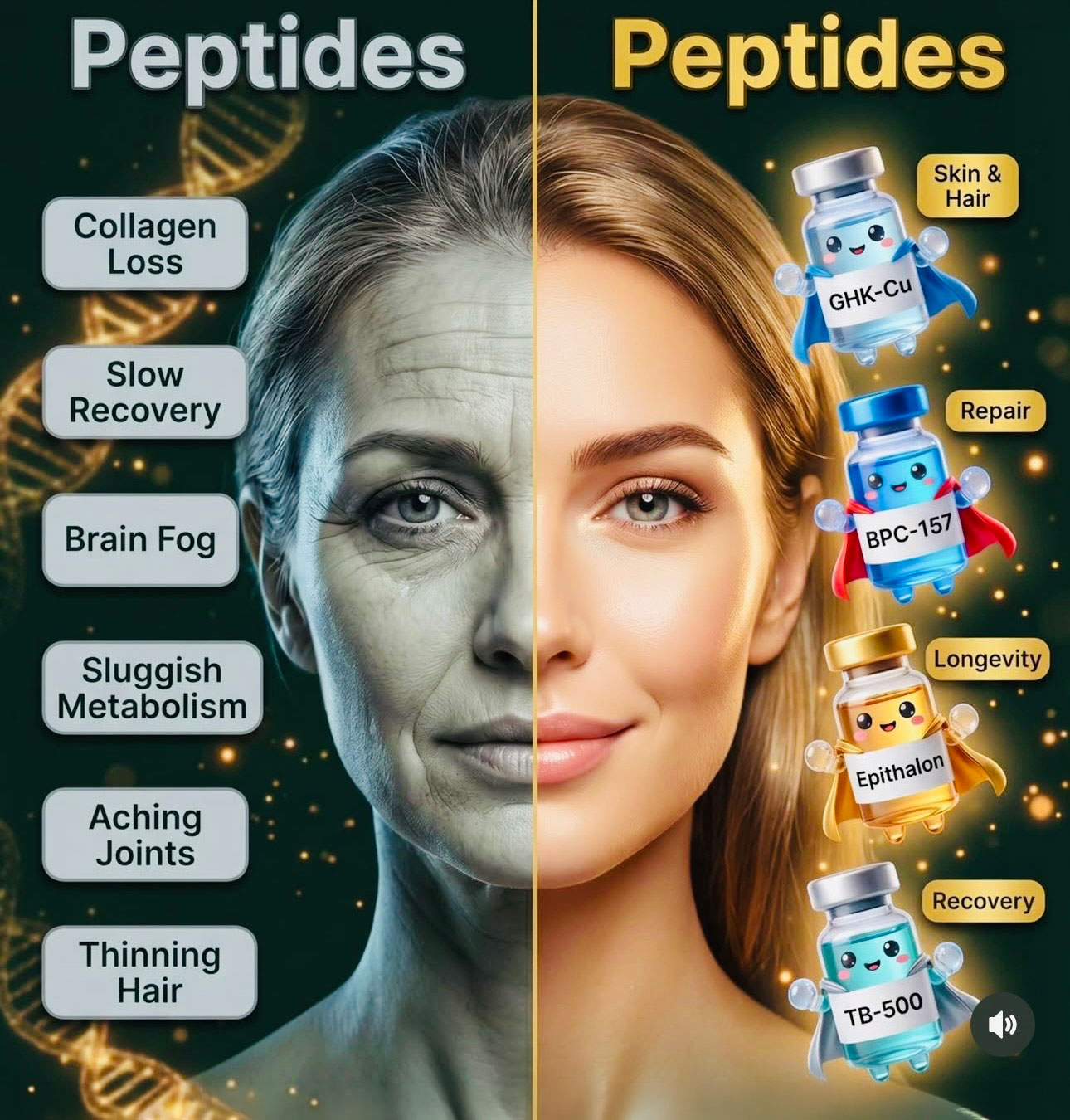
Always do your own research!! This is a breakdown of the products we sell and the health benefits of those products.
Peptides are short chains of amino acids, typically containing between two and 100 amino acids, which serve as the fundamental building blocks for proteins in the human body.
They act as chemical messengers and signaling molecules, regulating critical biological processes such as metabolism, immune function, hormone production, and cell communication.
These molecules play vital roles in health and wellness, with applications ranging from FDA-approved medications for weight loss and diabetes to skincare ingredients that boost collagen production and reduce wrinkles.
While the body naturally produces endogenous peptides, synthetic versions are widely used in dietary supplements and medical therapies to support muscle recovery, tissue repair, and anti-aging benefits
Peptides are formed when amino acids link together via peptide bonds, a type of covalent bond created through a condensation reaction that releases a water molecule.
This bond connects the carboxyl group (–COOH) of one amino acid to the amino group (–NH₂) of another, forming a chain. The length of the chain determines its classification: dipeptides(2 amino acids), tripeptides (3), oligopeptides (up to 20), and polypeptides (up to ~50).
Chains longer than 50 amino acids are typically classified as proteins.

Peptides perform diverse and critical roles in the body.