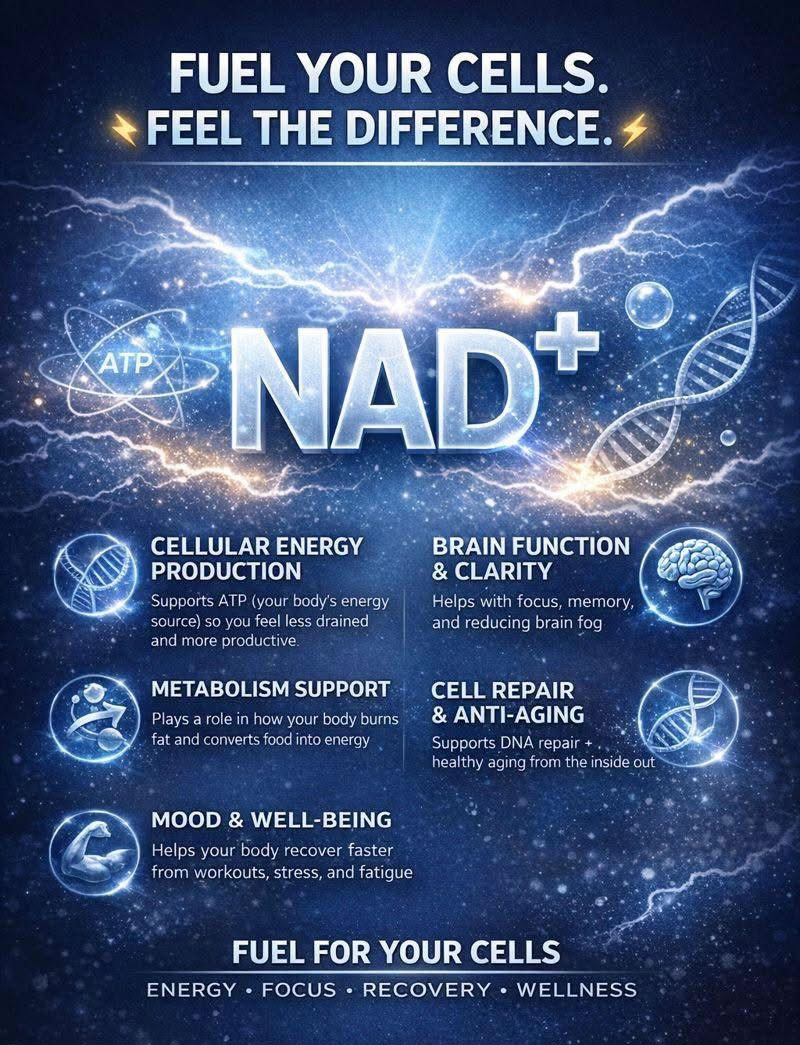
NAD+ peptide therapy generally refers to the administration of Nicotinamide Adenine Dinucleotide (NAD+)—often via IV infusion or injection—sometimes in combination with specific peptide compounds to target cellular repair and energy production.
Its primary function is to restore declining NAD+ levels found in every cell, which are critical for converting nutrients into cellular energy (ATP) and facilitating DNA repair.
Key benefits and effects include:
- Enhanced Energy and Vitality: By optimizing mitochondrial function, NAD+ helps cells produce ATP more efficiently, often leading to reduced fatigue and increased physical stamina.
- Cellular Repair and Anti-Aging: It activates sirtuins and PARP enzymes, which are essential for repairing damaged DNA, reducing oxidative stress, and slowing cellular senescence.
- Neuroprotection and Cognitive Support: NAD+ supports neuronal health by boosting brain energy levels and reducing neuroinflammation, potentially improving focus and mental clarity.
- Skin Health and Rejuvenation: In dermatological applications, NAD+ supports collagen and elastin production in dermal fibroblasts, helping to improve skin texture, firmness, and resilience against aging.
- Synergistic Effects with Peptides: When combined with peptides (like BPC-157 or GHK-Cu), the therapy aims to address both signaling pathways for tissue repair (peptides) and the energetic capacity required for that repair (NAD+).
preliminary human reports show promise for energy, cognitive function, and anti-aging, large-scale clinical trials in humans are still ongoing, and the efficacy of direct NAD+ injections versus oral precursors (like NR or NMN) remains a subject of scientific debate regarding bioavailability.